Phase Three — The South Carolina Forum Civic Assembly
The Civic Assembly ratifies Eight workforce policy recommendations by supermajority
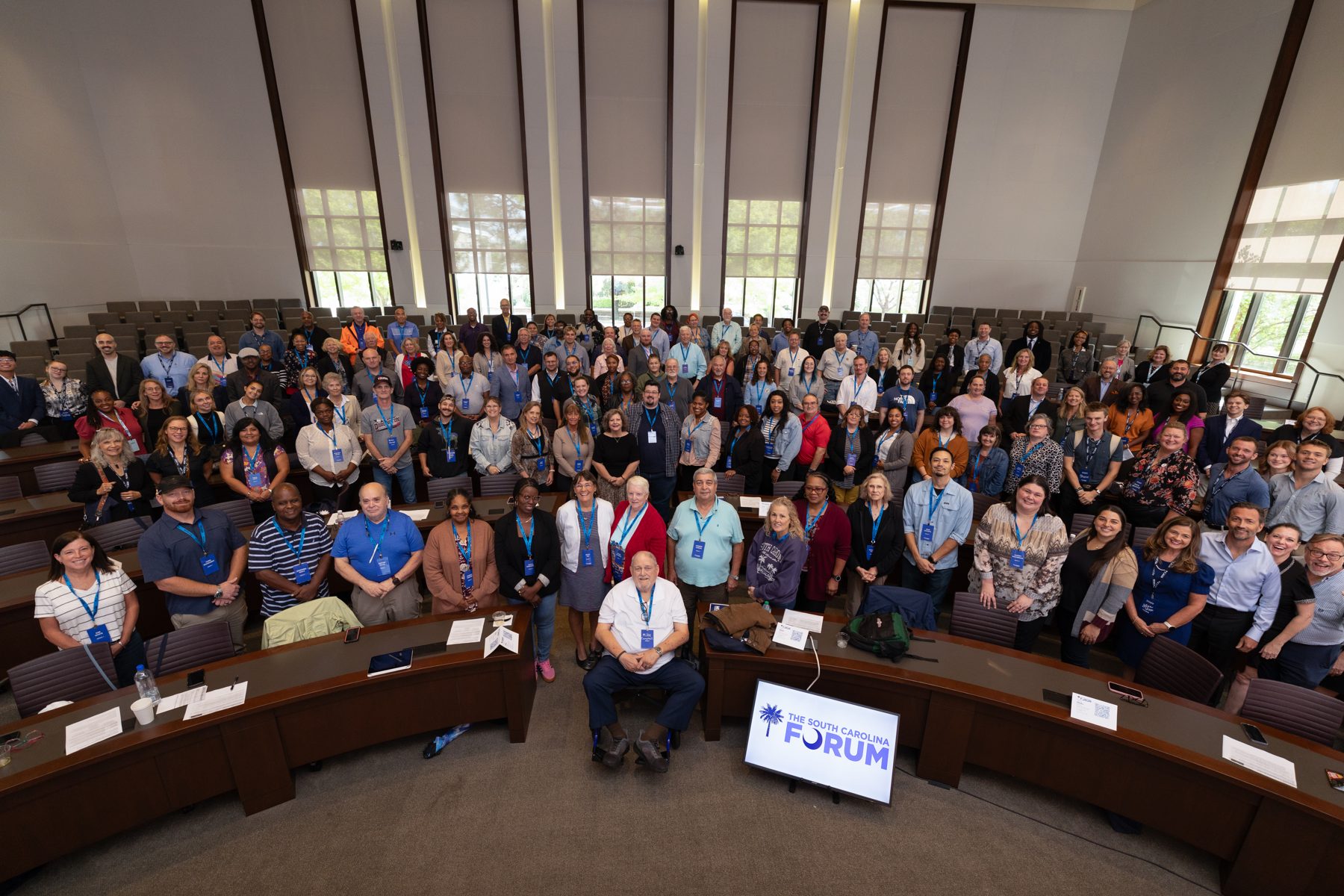
From October 9th to 11th, 94 South Carolinians from across the state participated in a Civic Assembly hosted by The South Carolina Forum. Over three days, these delegates drafted, deliberated, and voted on policy directives, with eight receiving supermajority support.
A diverse group of regular citizens from across the state tackled the critical issue of improving opportunity and affordability for South Carolina's workforce.
Each working group defined the issue they felt was the most important and created policy directives with the support of nonpartisan moderators. Workforce opportunity and affordability experts, representing different issue areas, were available to answer delegate questions.
94
Assembly Delegates
3
DAYS
8
Recommendations Approved
70%
Supermajority Threshold
02
Who Participated
The South Carolina Forum Civic Assembly's delegates were randomly selected and represent the diverse demographics of the state's adult population.
Age
18–34
12%
35–44
16%
45–54
26%
55–64
22%
65+
24%
Race / Ethnicity
Caucasian or White
64%
African American or Black
28%
Hispanic or Latino
4%
Asian or Pacific Islander
2%
American Indian or Alaskan Native
2%
Political Lean
Very conservative
17%
Conservative
31%
Moderate
21%
Liberal
23%
Very liberal
7%
Region
Midlands
37%
Upstate
24%
Lowcountry
19%
Pee Dee
19%
Note:The South Carolina Forum sought to recruit a politically balanced group of Civic Assembly delegates, bringing together diverse political perspectives and people of different life experiences.
03
The Process
The Civic Assembly featured four in-depth working sessions over three days. Independent experts on workforce opportunity and affordability briefed the delegates and answered questions to inform their discussions.
Session One
Define the problem and criteria
Session Two
Build and evaluate policy actions
Session Three
Draft policy directives and revise based on feedback
Session Four
Revise, present, and vote
Delegates talked about these themes
Theme 1
Workers' career opportunities
Theme 2
Employers, business development, and better jobs
Theme 3
Care that makes work possible
04
The Outcome – Eight Approved Directives
Delegates passed eight policy directives, with each receiving supermajority (>70%) support.
The policy recommendations below contain the exact text approved by the Civic Assembly, including any notes or clarification the delegates made. They have not been altered or summarized in any way.
Share of delegates voting yes
94%
Directive One
88 of 94 delegates voted yes Group 1 · Bundle and Work!
Maximizing career opportunities for SC’s workforce
Policy actions
Action 1
Expand and streamline state-funded SC Works & Apprenticeship Carolina and add the following:
Administrative support for small and midsize businesses for federal and state Registered Apprenticeship Program (RAP) compliance and tracking to create additional apprenticeship opportunities
Encourage employers to offer more opportunities for on-the-job training
Action 2
Services offered by SC Works can be bundled to serve individual needs. The state determines eligibility, and services would automatically adjust to cost of living regionally.
Bundling takes place during the “on-boarding” stage of the apprenticeship
Action 3
This expansion will be paid for by existing federal and state funding. Additional employer credits will be offered to encourage participation of small and midsize businesses.
Background: SC Works Already Offers
Transportation vouchers
Childcare vouchers
Tools necessary for certain jobs
Textbooks provided
Paperwork assistance
Current Status
All South Carolinians of working age are eligible to apply for any apprenticeship or on-the-job training available.
Current state funding ≈ $88 million
86%
Directive Three
81 of 94 delegates voted yes Group 4 · Responsible Business Practices and Competitive Wages
Motivate businesses to implement responsible practices that generate competitive wages, while incentivising economic growth.
Policy actions
Action 1
Enact pre-employment regulation requiring all employers to disclose accurate pay ranges on their job postings
Action 2
Establish procedures for Citizen Participation in the regulatory review process created by the Small Business Regulation Freedom Act of 2026, when a regulation directly affects their business.
Reducing regulatory burdens can lower operating costs for small businesses, allowing more resources to be directed toward employee wages, benefits, hiring, and business growth
84%
Directive Five
79 of 94 delegates voted yes Group 6 · CARE – Commitment, Accountability, Reporting and Create
Create accountability on corporate incentives.
Policy actions
Action
For the state to establish an oversight or enforcement mechanism to track incentives, such as tax abatements and job-development credits, and for the results of this mechanism to be reported to the General Assembly annually.
Why?
The state forgoes revenue in corporate incentives that don’t deliver.
For example, South Carolina school districts lost nearly $3.2 billion in property tax revenue from corporate abatements between 2017 and 2023.
Without a good oversight and enforcement mechanism, any incentives for job creation are useless.
83%
Directive Two
78 of 94 delegates voted yes Groups 2–3 · Outreach and Coordination of Work Programs
Expand and improve outreach and coordination on existing work programs to increase effective utilisation. Track it and prove it.
Policy actions
Action 1
Increase a marketing and outreach budget, with a set percentage allocated to targeted outreach based on geographic areas of need.
Outreach may include: social media, radio, PSAs, ads on buses, streaming, influencers
Pilot a voluntary and compliant program for “Information kiosks” in libraries to access services from government, employers and non-profits (with cost offsets by paid advertising)
Action 2
Conduct an audit of the SC Works website and make improvements based on user experience:
Include a searchable, comprehensive directory of resources which addresses barriers to job opportunities (e.g., housing, childcare, legal services)
Action 3
Identify a central body accountable for the coordination of services; reporting quarterly to the legislature.
81%
Directive Seven
76 of 94 delegates voted yes Group 8 · Economic Development Agreements for Child and Elder Care
Encourage economic development agreements that improve quality, availability, and affordability for child and elder care in South Carolina.
Policy actions
Action 1
As part of an incentive agreement to begin or expand operations within the state, the SC Department of Commerce shall be authorized to award supplemental tax credits or deductions, within limits established by the legislature, to businesses that establish, operate, or enhance childcare, eldercare, or senior activity facilities within the communities in which they operate.
Action 2
Tax incentives shall be available for establishing and operating fully licensed facilities, and preference shall be given for agreements that establish facilities with enhanced safety features.
Action 3
Agreements must be negotiated with input from relevant county and city officials to ensure community needs are met.
Action 4
Facilities’ services shall be available on a sliding scale, including a reasonable share of slots available at no out-of-pocket cost to low-income families.
Action 5
Some slots shall be reserved for members of the communities at large.
Action 6
Businesses shall receive tax credits and deductions after achieving certain operational and performance benchmarks for their care facilities, which shall be established in the incentive agreements.
80%
Directive Six
75 of 94 delegates voted yes Group 7 · License to CARE
Reimagine existing state requirements and child/elder care resources to elevate worker wages and reduce family care costs without raising taxes.
Policy actions
To address the recruitment and retention of licensed workers, we propose:
Action 1
Modernize staffing ratios: safely increase daycare/elder care staff ratios (1:8 to 1:10) to maximize facility capacity and organic facility revenue.
Action 2
Deploy existing assembly funds: provide direct facility grants using pre-allocated unspent General Assembly funds, such as the SC DSS operational grant, to support provision of services through care workers.
Action 3
Deliver cost relief mandate: revenue generated from staff ratio optimization directly funds wage increases and reduces family tuition rates.
Proposed Title
License to CARE (Caregiver Availability and Rate Efficiency) Act
79%
Directive Eight
74 of 94 delegates voted yes Group 9 · Tri-Share Care Program
To ensure access to quality and affordable care for dependents of the workforce
Policy actions
Action 1
Create a statewide Tri-Share Care Program, splitting care costs equally among the family, the employer, and the state
Create a permanent South Carolina Care Trust Fund, financed by endowments and SC Education Lottery proceeds, to pay the state’s share of the Tri-Share Program for the long term
Include elder and adult-dependent care in the Tri-Share program, so caregivers of aging parents or disabled family members get the same support
Action 2
Set state voucher reimbursement rates at the true cost of quality care, so providers can pay and keep skilled, qualified staff
Action 3
Launch a statewide awareness campaign, based on existing data of workforce care needs, so families and employers know what support exists and how to use it
78%
Directive Four
73 of 94 delegates voted yes Group 5 · Public Cost of Living Index
Create a transparent, public-facing cost of living index resource.
Policy actions
Action 1
Created by the Department of Commerce in collaboration with the SC Councils of Government Development, Department of Revenue, Department of Labor, and the Good Jobs First Report
Action 2
All information will be publicly reported and accessible on a central platform/database (information already exists but is not accessible by the general public)
Action 3
Must be available on county websites such as SC Works
Action 4
Can be a supplement to other bills and policies
Action 5
This database will report the relevant information:
This database will inform county residents, employers, and legislators about the economic standards that need to be met
05
In the Room
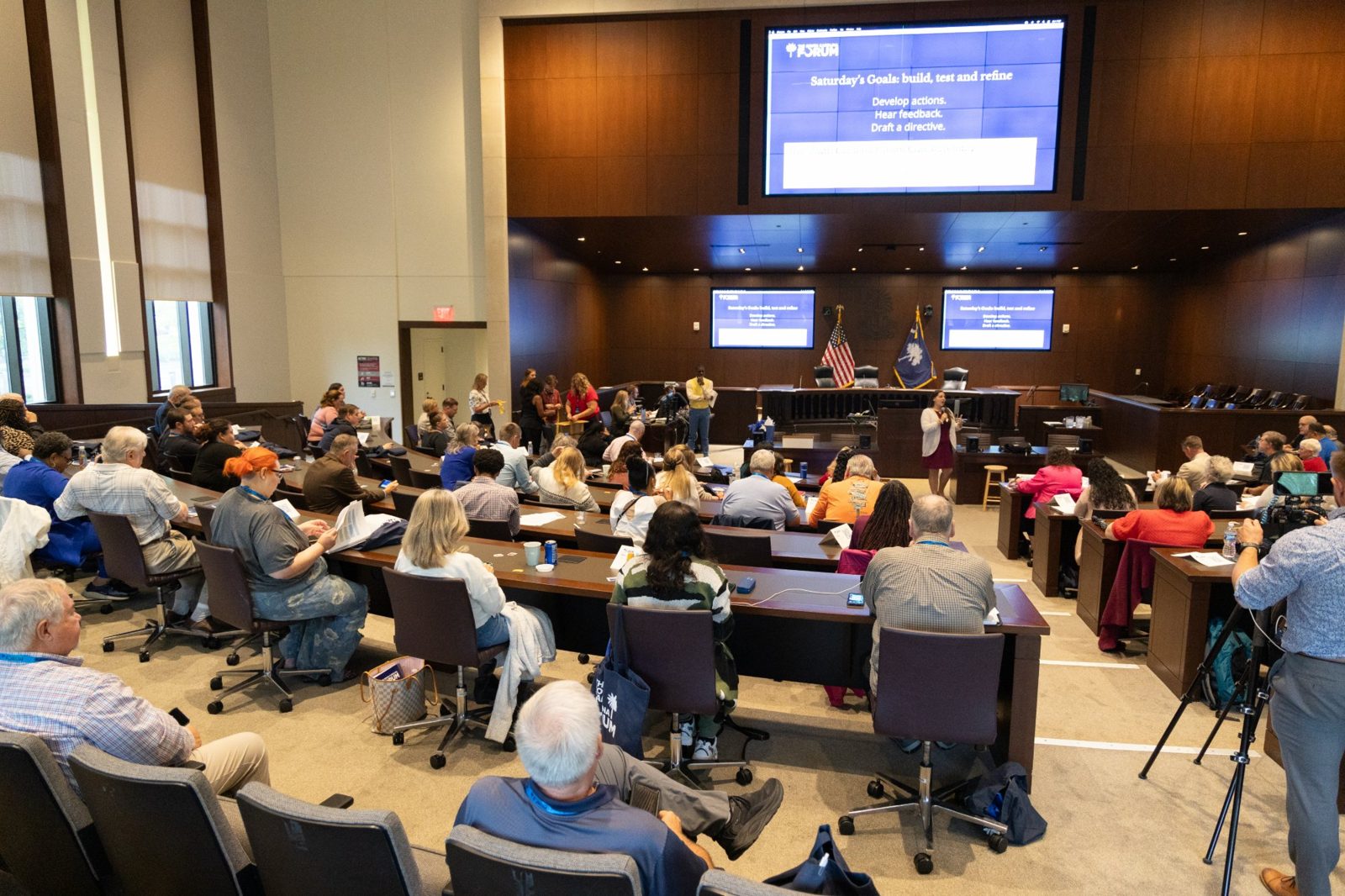
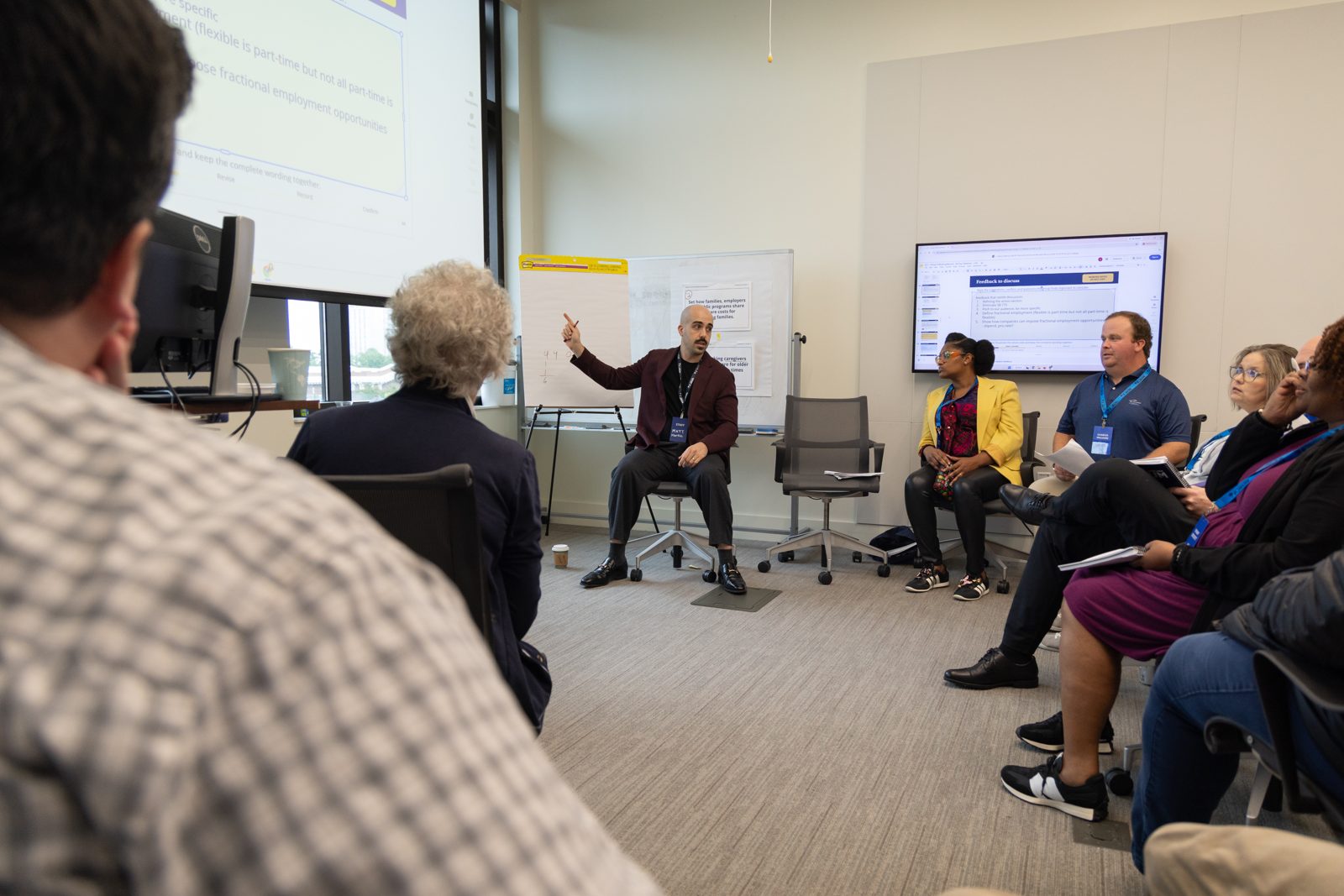
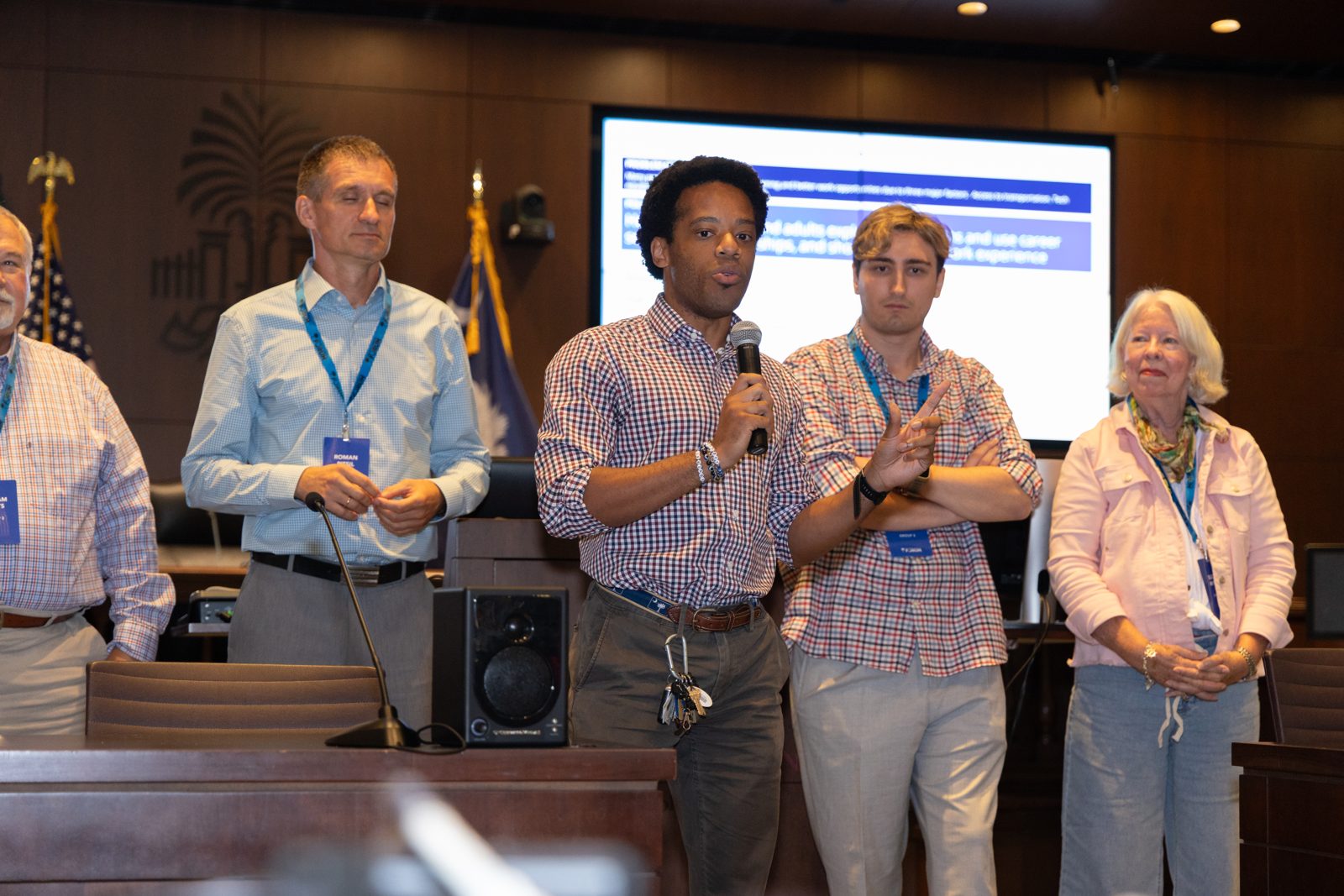
Three days at Joseph F. Rice School of Law in Columbia. Nine working groups, four deep-dive working sessions, expert panel discussions, three rounds of voting, one final set of ratified directives.
Plenary Discussion
Small Group Working Sessions
Group Presentations
The Delegates
06
Delegate Feedback
In the voices of South Carolinians, what they thought about the experience.
"The media portrays left vs right like we should hate each other and my experience at the SC Forum could not have been more different."
"100 people realiz[ed] the problems we face together are much greater than the culture that attempts to divide us."
"I feel we all come together for a common goal regardless of what political party we support."
"I was NOT optimistic about this. Politics has become volatile. But, this was BEAUTIFUL!... This has permanently affected me in a positive way!!"
Feedback on the process and anticipated impact
+88
Net Promoter Score
81 of 90 delegates were highly positive about the event; they gave 9 or 10 out of 10
93%
Expect positive impact
93% of delegates believe The South Carolina Forum will positively impact the state
97%
The process was fair
97% of delegates rated the Civic Assembly’s decision-making fair, 8 or higher out of 10
89%
WANT TO KEEP GOING
89% of delegates want to keep going and volunteered to help advance the Assembly’s work
These numbers are based on the 90 of 94 delegates who completed the post-event survey.
07
How We Got Here
Phase One
Identify the Top Issues
Online Engagement
From February 9th to April 30th, South Carolinians answered this question: If South Carolina's state leaders and residents could solve one problem, what should it be? More than 45,000 South Carolinians contributed issues, reactions, and votes, surfacing the top four issue areas.
In June and July, 568 South Carolinians signed up for eight online conversations and five face-to-face conversations across South Carolina. They discussed four issues, based on the input of thousands of residents in Phase One.
The work from The South Carolina Forum Civic Assembly continues. We’re working with South Carolinians to turn the Assembly’s policy directives into state legislation. Here’s what comes next:
1
NOVEMBER - DECEMBER
Engage Legislators
Goal: Partner with bipartisan legislators to sponsor a bill and submit to the South Carolina Legislative Council.
Action: Build initial support and bring constituent priorities into the legislative agenda.
2
EARLY 2027
Finalize Bill Text and Committee Review
Goal: Legislative Council finalizes the bill text, the sponsor signs it, and the bill receives a number before being formally introduced and referred to committee for review.
Action: Promote the public hearing and executive sessions, encouraging the committee to send the bill to the full chamber.
3
ONGOING STRATEGY (2027)
Mobilize Grassroots Advocacy
Goal: Drive public support throughout the entire legislative process to pass the bill.
Action: Empower South Carolinians to engage elected officials and advocate for the bill's passage.
Take Action
Sign Up to Be an SC Forum Champion
Citizen-led recommendations only become law when South Carolinians push for them. Sign up to help advance our workforce policy recommendations through the 2027 session of the South Carolina General Assembly.